Autumn 2025 blog
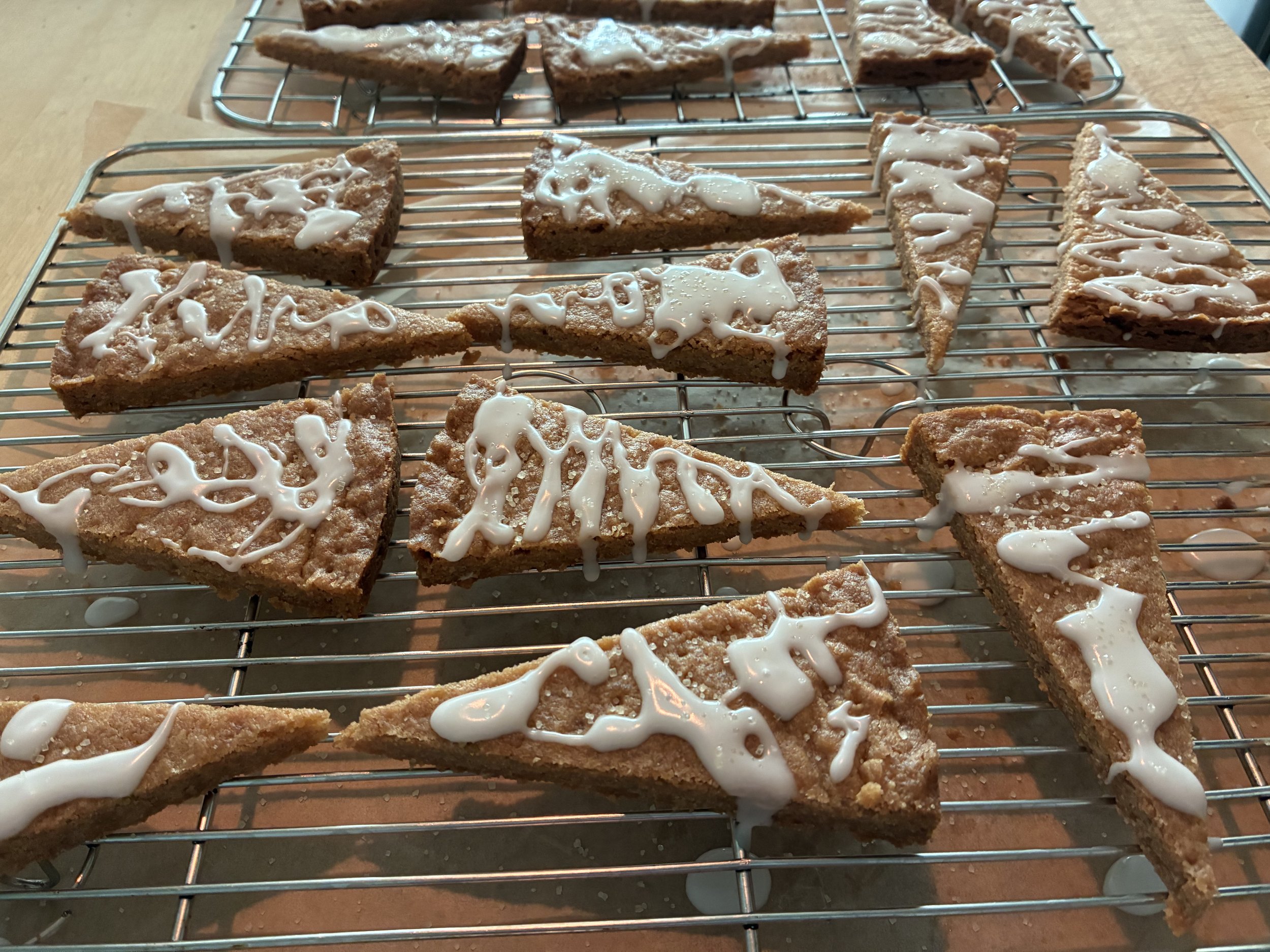
My ginger shortbread wedges
I’m a little late to the party when it comes to philosophizing about the impact of generative artificial intelligence (GenAI) on fiction writing. But in my defense, I’ve always been someone who takes her time to analyze issues before forming an opinion. An overthinker? Probably, but I gotta be me.
Some writers, like Margaret Atwood, aren’t particularly worried about it, (although she does think writers should be compensated if their work is used to train GenAI).
Other authors think GenAI is an existential threat to those who make their living writing fiction. I’m squarely in this camp.
A November 2025 study shows, among other things, that more than one third of novelists report income loss because of competition from GenAI fiction, and nearly two-thirds of novelists report that their work has been used to train AI without permission, and without remuneration.
A little context:
-The average writer’s income in Canada is $12,879.00.
-Jensen Huang, Nvidia’s CEO and one of the architects of AI featured in TIME’s 2025 Person of the Year, made 49.9 million this year. You can look up the incomes of the other AI tech titans, or I can save you the trouble and tell you they all make stratospheric amounts of money.
The disparity is clear. And clearly, GenAI companies and their owners can more than afford to compensate fiction writers.
But what really bothers me about this whole issue is the disconnect.
Our ability to be creative, to be imaginative, is what makes us human, yes? Margaret Atwood points out “AI is a crap poet,” meaning GenAI can’t replicate human creativity. I agree.
Except that there is a growing market for AI-written fiction – crap or not. So much so, that a long list of famous authors have signed a petition demanding publishing houses refrain from releasing books created by AI. The heart of their argument is that disconnect I’m talking about. As the petition says, “AI may give the appearance of understanding our humanity, but the truth is, only a human being can speak to and understand another human being.”
Think about that for a moment. If we accept fiction written by algorithms and data – if there is a growing market for it - what does that say about us?
The answer horrifies me.
What do you think? I’d love to hear your thoughts.
In other news, I’m working away on my final draft of How the Invisible Woman Learned to Fly, but I plan to slow down for the next couple of weeks. Friends and family are coming to visit and I’ve got Christmas baking to do, (my first batch of shortbread pictured above); turkey and other rich foods to eat and then regret; and I’m overdue for a couple of days of just generally lazing about.
On that note, I’d like to wish you a very happy holidays!
PS – I spent the summer and fall working my way through Tana French’s oeuvre. If you are looking for a good novel to read over the holidays, look no further. Any one of her novels will transport you. If you’re looking for an entry point, try either Faithful Place or The Searcher.